


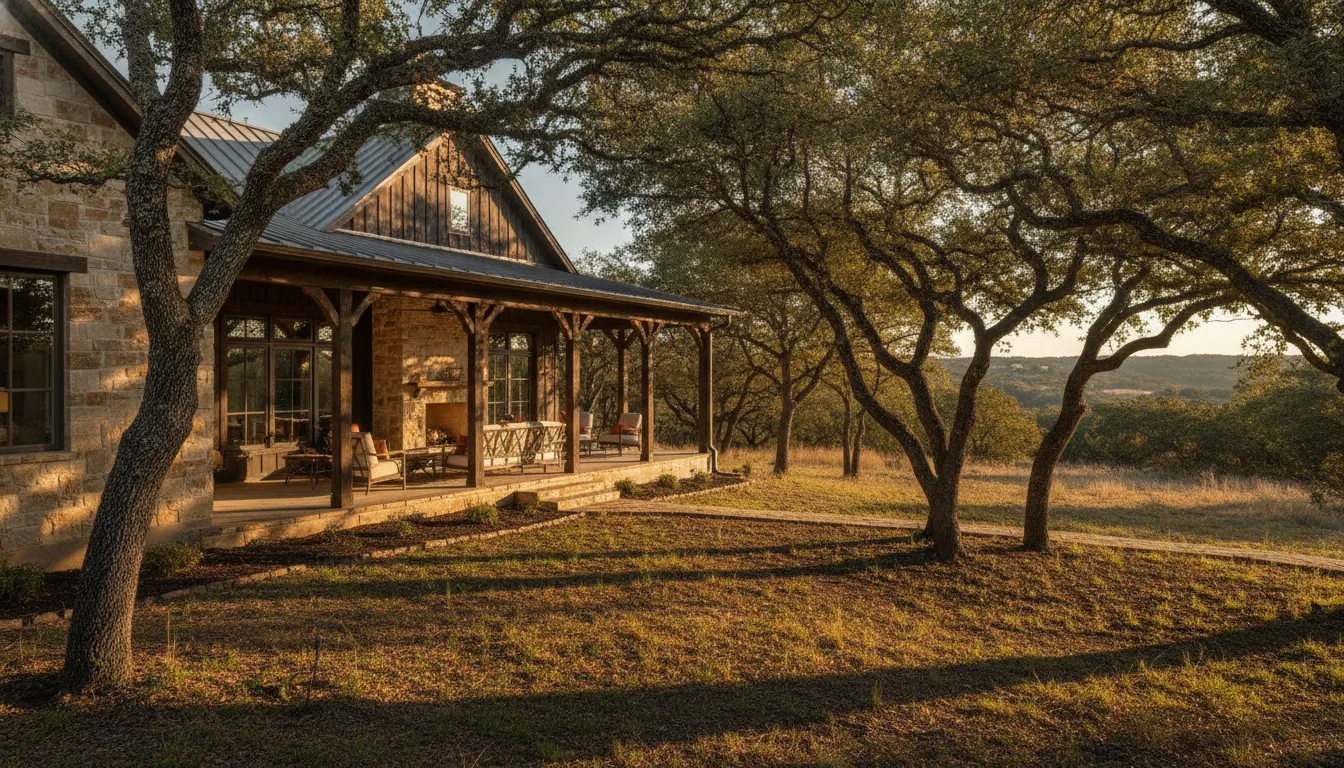
This guide compares building on your own lot with buying a home in a Texas community.
A Build on Your Lot (BOYL) home is a fully custom home built on land you already own or choose. While a New Home Community build is constructed on a pre-developed lot with more established infrastructure and neighborhood amenities.
Choosing between build on your lot vs. a new home community builder Texas comes down to priorities: BOYL gives you more control over the homesite, layout, and features. While a new home community build can simplify the early logistics and connect you to a planned neighborhood. Nearly 60% of custom home buyers prefer land they own or select independently, according to the National Association of Home Builders.
Neither path is automatically better. Your land, desired level of personalization, timeline, and interest in shared amenities should guide the decision. JLP Builders supports both approaches across the Texas Hill Country, including New Braunfels, Boerne, and the Highway 46 and 281 corridors. Our guide to building on your lot in Texas explains the BOYL process in greater detail.
Schedule a free consultation to discuss which route fits your property and plans.
Build on Your Lot vs. New Home Community Builder: What Does Each Path Mean in Texas?
What is the difference? A build-on-your-lot home is a custom home built on land you already own or select. While a community build takes place on a pre-developed lot with the builder's available plans and options.
Both paths can lead to a high-quality Texas home. The important difference is where your choices begin: with the land itself, or with a neighborhood and lot that are already established.
What does build on your lot mean?
Build on Your Lot, often called "BOYL", gives you greater control over the relationship between the home and its site. You can choose land that fits your priorities, then develop a design around the property rather than selecting from a limited set of predefined lots.
- Site selection: You can choose a location that fits your commute, lifestyle, privacy needs, and long-term plans.
- Site attributes: Depending on the property, you may be able to prioritize views, home orientation, outdoor living areas, and how the structure sits on the land.
- Design autonomy: The floor plan, finishes, rooms, and features can be shaped around how your household actually lives.
- Land responsibilities: Raw land may require additional planning for utilities, permitting, grading, drainage, water, or septic systems.
That last point matters in the Texas Hill Country. A rural or undeveloped parcel can offer privacy and a distinctive setting, but it may require more site preparation and infrastructure planning than a finished community lot. The builder must evaluate the land before the home design and construction schedule can be finalized.
What does it mean to build in a new home, or production community?
A new home or production community starts with a neighborhood that has already been planned and developed. Lots are typically predefined, and the builder offers a range of home plans, elevations, finishes, and upgrades that fit the community's requirements.
- Infrastructure: Communities often provide pre-installed access to utilities such as water, sewer, and electric.
- Amenities: Master-planned neighborhoods may include features such as parks, trails, walkways, or nearby retail.
- Defined choices: You select from approved lots and options, which can make decisions more straightforward.
- Neighborhood setting: The home's orientation, views, setbacks, and exterior rules are influenced by the community plan.
In practical terms, Build on Your Lot usually offers more control over the property and design, while a community build offers a more established setting and streamlined land-development requirements. The great thing about communities in the Texas Hill Country, there are several "master planned" communities that offer Build on Your Lot with acreage homesites.
Timeline Differences Between BOYL and a New Home/Production Community Builds in Texas
Build-on-your-lot timelines usually begin before design because the property must support the home. Community builds often start with infrastructure already in place.
That extra preparation does not make BOYL the wrong choice. It means the schedule depends more heavily on the land, utilities, approvals, and site conditions.
- Confirm lot readiness. Before design begins, verify water access, electric availability, drainage, grading, and wastewater plans. A raw-land project generally requires more site preparation and infrastructure planning than a developed community lot.
- Resolve utilities and wastewater. Determine how the property will receive water and electric service. Confirm whether it can connect to a public sewer system or needs an on-site sewage facility. These decisions can affect layout, approvals, and construction sequencing.
- Plan grading, drainage, and erosion controls. Site work should account for how water moves across the property. Construction activities that disturb soil may also require stormwater compliance. Review the Texas Commission on Environmental Quality construction stormwater guidance for applicable requirements.
- Complete design and permitting. Once the lot conditions are understood, the home can be designed around the site. The builder can then coordinate required plans, permits, utility details, and wastewater documentation before construction starts.
- Begin construction and inspections. After approvals and site preparation, construction can proceed. A clear schedule should identify the major milestones, inspections, material decisions, and owner approvals.
In a community build, the lot is often prepared with roads and utility infrastructure already established. Buyers still choose a home plan, selections, and finishes, but fewer land-readiness questions may come first. Buyers also do not have the buy the land separately, as this is rolled into the total purchase price with the builder.
That difference can support a faster move-in timeline for community buyers. BOYL buyers trade some early convenience for greater control over location, orientation, and the relationship between the home and the land.
Custom demand remains strong. Custom single-family housing starts reached 186,000 homes in 2025, a 3% increase from 2024, according to NAHB data. The right schedule depends on the property and the buyer's priorities.
Cost Comparison: Build on Your Lot vs. a Pre-Developed Community Lot
The biggest cost difference is not simply the house. It is what the lot requires before construction begins, what the builder includes, and how much control you want over the final result.
Housing affordability deserves a realistic starting point. The National Association of Home Builders reports that home prices rose 53% since 2019, while median household income rose 24%. That gap makes scope, allowances, and site conditions important parts of any buying decision. NAHB's housing affordability analysis provides the broader market context.
Build-on-your-lot and community-build cost factors| Cost Factor | Build on Your Lot | Community Build |
|---|---|---|
| Land | You purchase or already own the land. Your budget may also need to account for the lot's access, topography, and readiness. | The lot is purchased within the community, often with established streets, utilities, and neighborhood infrastructure. |
| Permits, utilities, and site preparation | Costs depend on the property. Planning may include permitting, utility connections, water or septic coordination, drainage, grading, and electric readiness. | Many core infrastructure items are already planned or installed, which can make early budgeting more predictable. |
| Design and customization | You have broader control over the home, orientation, layout, finishes, and site relationship. More choices require clearer scope management. | You typically choose from approved plans, lots, and options. The tradeoff is a simpler selection process with less site-specific flexibility. |
| Price range | There is no universal total. The final investment depends on land, site work, size, design, finishes, and selections. Request a custom quote. | The total depends on the lot, home plan, options, community fees, and available incentives. Compare the complete contract, not only the advertised base price. |
Community builders may use incentives or price reductions to address affordability pressure. NAHB reports that 67% of builders offered incentives, while 41% cut prices. These offers can change, and they may apply only to specific homes, lots, or financing arrangements. Review the details behind those market figures before treating an advertised offer as a final comparison.
For BOYL projects, the responsible next step is a property-specific review rather than a per-square-foot estimate. A builder should evaluate the land, intended home, infrastructure, and finish level before pricing the work. JLP does not publish a fixed per-square-foot rate or promise a firm project price without that review. Learn more about building on your lot in Texas, then request a custom quote based on your property and priorities.
Flexibility and Customization: The Real Tradeoffs
The central difference between building on your lot and choosing a community home is how much control you want over the setting, design, and daily experience. Neither path is automatically better. The right choice depends on whether your priorities center on personal autonomy or ready-made convenience.
What building on your lot gives you
- Control over the site. You can choose land based on views, privacy, access, and the orientation of the home. That freedom is often unavailable when a community builder limits buyers to predefined lots.
- A home shaped around your life. Instead of selecting from a fixed model menu, you can make more deliberate decisions about the floor plan, room relationships, storage, and future needs. A larger pantry, specialized kitchen storage, a home office, or a flexible room can be planned into the design from the beginning.
- Personalized technology and comfort. Custom buyers may prioritize integrated lighting and security, energy management, soundproof walls or floors, and above-standard energy or indoor-air-quality certifications. These choices can support comfort and long-term performance, not just appearance. NAHB research identifies these features among the priorities of higher-end buyers.
- Outdoor living that fits the property. Patios, decks, covered areas, and other outdoor features can be positioned around the lot, views, and desired flow between indoor and outdoor spaces.
What a community build makes easier
A developed community can reduce decisions and coordination. Predefined lots, established infrastructure, neighborhood planning, and shared amenities create a more structured path. Buyers may value nearby trails, parks, walkways, retail, and a built-in neighborhood setting as much as they value a highly individualized floor plan.
The tradeoff is that the community's lot, architectural guidelines, and available models may narrow your choices. You might gain convenience while giving up some control over orientation, exterior details, room dimensions, or specialized features. For buyers comparing build on your lot vs community builder Texas, this is the practical question: which constraints would feel helpful, and which would feel limiting?
How JLP reduces the stress of customization
More flexibility can create more decisions, but it does not have to mean less visibility. JLP Builders uses a 17-point inspection process and real-time build tracking to make quality control and progress easier to follow. That systematic communication helps landowners stay informed while their choices become a finished home.
If site and design autonomy matter most, review JLP's Build On Your Lot service and discuss which choices should be settled early.
Which Approach Fits Your Situation in Texas Hill Country?
Q: Who should consider building on their lot?
Build on your lot may be the better fit if you already own land, want a private rural setting, or have a specific Hill Country view in mind. It also suits buyers who want the home design, orientation, outdoor living areas, and finishes shaped around their property rather than a predefined lot and model.
- You already own land in or near New Braunfels, Boerne, Comal County, or the Hill Country.
- You want a highly customized floor plan, specialized storage, technology, or energy-efficiency features.
- You value privacy, acreage, natural views, and control over how the home sits on the site.
- You are comfortable giving more attention to land readiness, utilities, permitting, and site decisions.
Families moving from higher-cost metros into growing counties such as Comal often choose this path to balance a tailored lifestyle with Texas Hill Country value. Nearly 60% of custom home buyers prefer land they own or select independently, according to the National Association of Home Builders.
Q: Who should consider a community build?
A community build may be the stronger choice when convenience, neighborhood amenities, and a more direct path to construction matter most. Developed communities can reduce site-management demands because the lot, infrastructure, and neighborhood framework are already established.
- You want walkable amenities, parks, trails, retail access, or a built-in neighborhood setting.
- You prefer a shorter path to starting construction on a prepared lot.
- You would rather choose from an established collection of plans and options than manage every site variable.
- You want less responsibility for rural access, utility coordination, drainage, or other raw-land considerations.
Buyer priorities vary by segment. Entry-level buyers may emphasize predictability and convenience, while high-end buyers may place greater value on privacy, personalization, and site-specific design. JLP Builders supports both paths, with transparent communication, real-time build tracking, and a 17-point inspection process to make decisions easier to follow.
Explore JLP community home builder options if neighborhood living fits your goals. If you want a clearer view of the managed construction path, review the turnkey custom home building guide. Landowners can also compare the process in this guide to building on your lot in Texas.
Frequently Asked Questions
Is it better to build on your own land?
Neither path is universally better. Building on your own land offers more control over the homesite, orientation, layout, and design. A pre-developed community lot may simplify utilities, permitting coordination, neighborhood amenities, and the move-in timeline. The right choice depends on whether you value land autonomy or a more structured building process.
How much does it cost to build on your own land in Texas?
The total depends on the home design, site conditions, utility requirements, permits, grading, and whether water or septic infrastructure is needed. A community lot may reduce some site-development work, but it can include lot-specific rules and fees. The most reliable approach is to request a custom quote based on the property and desired home, rather than relying on a generic price per square foot.
How long does a build-on-your-lot home take compared with a community build?
A BOYL project typically has more early coordination because the land may require site preparation, utility planning, drainage review, and permitting before construction begins. A community build often starts with a pre-developed lot and established infrastructure, which can streamline the early phases. Actual timing varies by design complexity, approvals, site conditions, and material availability.
Can I build on a lot I own in Kendall County or New Braunfels?
Yes, a privately owned lot in areas such as Kendall County or New Braunfels may be suitable for a custom home, subject to site evaluation and local requirements. The builder should review access, utilities, water, septic or OSSF needs, drainage, grading, and applicable restrictions before finalizing the plan.
Does JLP Builders build in communities too?
Yes. JLP Builders works with both landowners pursuing a build-on-your-lot home and buyers building in pre-developed communities, that offer Build on Your Lot options. That allows the conversation to focus on your preferred location, design flexibility, timeline, and level of project guidance instead of forcing one construction path.
Schedule a Conversation About Your Texas Hill Country Build
Choosing between building on your lot and a pre-developed community depends on your land, timeline, and priorities. JLP Builders can help you compare the practical next steps for a custom home that fits your vision and location.
Schedule a free consultation to talk through your options with the JLP Builders team.